Medical Aesthetics
Hair Restoration in Kirkland, WA
Thinning hair does not have one cause. Your treatment plan should not have one answer.
Hair restoration at Divine Naturopathic Clinic starts with understanding the pattern, timing, scalp health, medical history, and possible contributors behind your concerns. From there, we can discuss non-surgical options that may fit your goals and clinical picture.
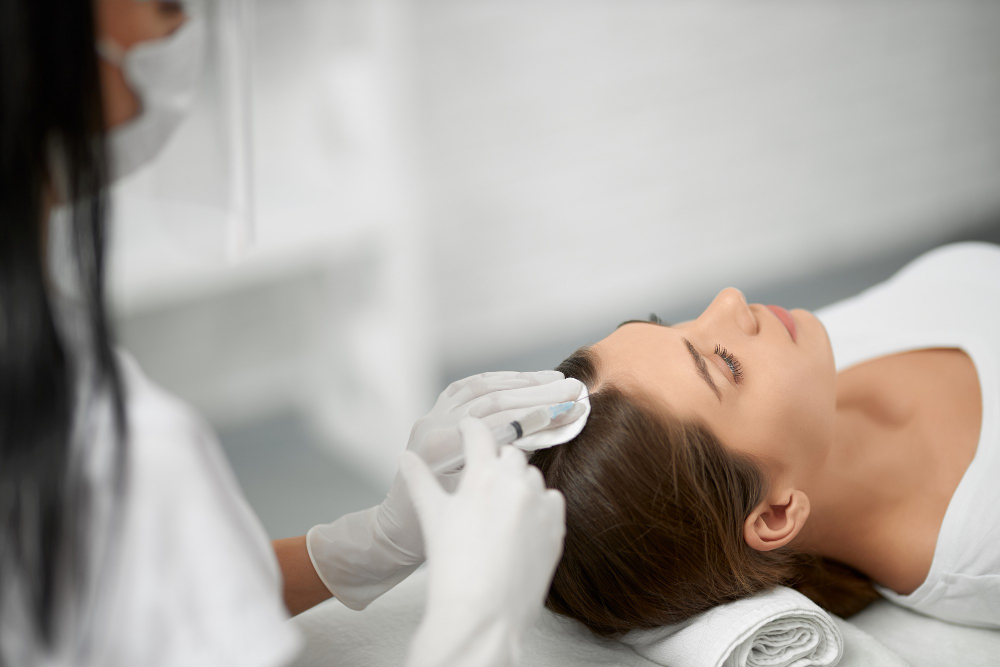
Treatment Focus
Selected concerns involving thinning hair, reduced density, ongoing shedding, and scalp health.
Treatment Approach
Non-surgical, evaluation-led care with treatment options selected according to the pattern of hair loss, clinical context, and goals.
Recovery
Recovery depends on the treatment method. Some in-office options may cause temporary scalp tenderness, redness, swelling, or sensitivity.
Treatment Plan
Some approaches may involve a treatment series, follow-up evaluation, or maintenance based on the method used and how your hair and scalp respond.
About the Treatment
What Is Non-Surgical Hair Restoration and How Does It Work?
Hair restoration is not one single procedure. It is a broad term for approaches intended to support hair density, reduce the impact of selected hair-loss patterns, or improve the conditions that support healthier hair and scalp function.
At Divine, non-surgical hair restoration begins with evaluation rather than assuming that every person with thinning hair needs the same treatment.
Hair loss can be influenced by many different factors, including hereditary patterns, hormonal changes, stress, illness, medications, nutrition, scalp conditions, and other health issues. Because the cause matters, the first step is to understand how and when the hair changes began, what pattern is present, and whether there are other symptoms or health factors that may be relevant.
Your evaluation may include a review of your health history, medications and supplements, recent stressors or illnesses, hormonal or metabolic concerns, nutrition, scalp health, and previous hair-loss treatments. Testing or additional evaluation may be considered when it is clinically useful.
From there, your clinician can discuss which non-surgical options may be reasonable, what each option can and cannot do, and whether another type of medical or dermatologic evaluation would be more appropriate.
Common Concerns
What Can Hair Restoration Help With?
Hair and Scalp Concerns We May Evaluate
Gradual Hair Thinning
A gradual reduction in hair density can have different causes. Evaluation helps determine whether a non-surgical hair restoration approach may be appropriate and what factors should be addressed first.
Increased Shedding
Not all shedding represents the same type of hair loss. Changes related to stress, illness, hormonal shifts, medications, nutrition, or the natural hair cycle may require different next steps.
Pattern Hair Loss
Selected non-surgical approaches may be considered for certain patterns of male or female hair loss. The treatment decision depends on the type and stage of hair loss, the condition of the scalp and follicles, and the overall clinical picture.
Scalp Health & Treatment Readiness
Healthy scalp conditions matter when planning hair-restoration care. Irritation, inflammation, or other scalp concerns may need to be addressed or evaluated before a regenerative or procedural treatment is considered.
Your Treatment Journey
What to Expect, Results & Recovery
Candidacy
Is Hair Restoration Right for You?
The right hair restoration plan starts with the right diagnosis.
Non-surgical hair restoration may be worth discussing if you are noticing gradual thinning, reduced density, ongoing shedding, or changes in your scalp or hair pattern and want to understand what options may be available.
It is not the right solution for every type of hair loss.
Some forms of hair loss are temporary and improve when the underlying trigger resolves. Others may be related to hereditary patterns, autoimmune disease, medications, hormonal or metabolic factors, scalp disease, scarring conditions, or other medical issues that require a different treatment pathway.
Sudden hair loss, patchy loss, scalp pain, significant redness or scaling, or signs of scarring deserve careful evaluation rather than proceeding directly to a cosmetic hair-restoration procedure.
A consultation can help determine what type of evaluation makes sense, what may realistically be improved, and whether a non-surgical hair restoration approach fits your situation.

Cost & Consultation
How Much Does Non-Surgical Hair Restoration Cost?
Hair restoration pricing varies based on the treatment approach, your treatment plan, and the number of sessions recommended.
We may also offer seasonal specials or promotional pricing, so contact our clinic to check current pricing and available offers before scheduling.
FAQ
Frequently Asked Questions
Care at Divine begins with understanding your symptoms, history, lifestyle, and goals. From consultation to evaluation and follow-up, each step is designed to support informed, personalized care.
